
For several years, Scotland was the most difficult place in the United Kingdom to make the case for purpose-built rental housing. Uncertainty over rent controls halted institutional funding, consented schemes sat idle and capital moved south to Manchester, Birmingham and Leeds. That position has now changed. With the Housing (Scotland) Act 2025 on the statute book and secondary legislation confirming that qualifying build to rent (BTR) homes are exempt from rent control areas, the sector finally has a stable rulebook.
This guide sets out what the new framework means in practice: how rent control areas will work, which properties qualify for exemption, where the development pipeline stands, and how a long-term investor should approach Scottish BTR in 2026 and beyond.
The Policy Background
The Housing (Scotland) Act 2025 received Royal Assent on 6 November 2025. Its central rental measure is a statutory process that allows Scottish Ministers to designate rent control areas, informed by assessments of local rent conditions that every local authority must carry out at least once every five years.
Within a designated rent control area, annual rent increases on private residential tenancies are capped at the Consumer Price Index (CPI) plus one percentage point, up to a maximum of 6%. The cap applies both during a tenancy and between tenancies. A designation lasts for a maximum of five years unless it is lifted earlier, and Ministers must consult the local authority and representatives of landlords and tenants before making one. Industry commentators expect the first controls to be in place by 2027.
The formula itself was a compromise. Earlier proposals left the level of any cap open, which made long-term income impossible to underwrite. A defined CPI plus 1% ceiling, with a 6% upper limit, gives investors a figure they can model, even where a control applies.

The Exemption for Build to Rent and Mid-Market Rent
The decisive step for investors came with the Private Housing Rent Control (Exempt Property) (Scotland) Regulations 2026, which came into force on 1 April 2026. They confirm that build to rent and mid-market rent (MMR) properties are exempt from the rent control area restrictions. The Scottish Government had already confirmed that purpose-built student accommodation sits outside the regime.
What Counts as Build to Rent
A property qualifies as build to rent only where every one of the following conditions is met:
| Requirement | What the Regulations Require |
|---|---|
| Type of works | Built, converted or renovated for residential use |
| Scale | Part of a development of six or more properties covered by the same planning permission |
| Ownership | All properties in the development owned by the same person or group of persons |
| Completion date | On or after 31 August 2021 |
| Tenancy use | Let solely under private residential tenancies since completion, with no owner occupation or short-term letting |
| Registration | Included in the owner’s entry in the landlord register |
Source: The Private Housing Rent Control (Exempt Property) (Scotland) Regulations 2026, regulation 4.
Conversion requires a planning application for a change of use to a dwelling. Renovation applies only where the building was previously unsuitable as a home, for example because its structural integrity was compromised. This makes the exemption relevant to well-executed adaptive reuse projects as well as new build, a subject we have covered in our article on reviving heritage through adaptive reuse in Scotland.
How the Exemption Can Be Lost
The exemption is not permanent by default. It ends at the earliest of four events: the owner occupying a property as their main home, the property being used as a short-term let, its removal from the landlord register, or the property ceasing to form part of a qualifying development. In practice, piecemeal disposal of units to individual buyers, or a switch to holiday letting, would put the exemption at risk. Single ownership and a long-term rental strategy are therefore conditions of the exemption itself.
What Counts as Mid-Market Rent
Mid-market rent properties qualify where the landlord is restricted from raising rent above the median market rent for that size of property in the relevant broad rental market area, and the rent is not in fact raised above that level. The restriction can come from Scottish Government or local authority funding conditions, directly or indirectly, or from the terms of the tenancy agreement.
What Still Applies
Exemption from a rent control area does not mean an absence of regulation. The general rules governing private residential tenancies under the Private Housing (Tenancies) (Scotland) Act 2016, including limits on how often rent can be increased, continue to apply to exempt properties. Scotland’s open-ended tenancy model, with its restrictions on no-fault eviction, also remains in place. With England’s Renters’ Rights Act 2026 now introducing similar protections, the gap between the two regimes has narrowed considerably.
The Scale of the Opportunity
Scotland’s BTR market remains small by UK standards, which is part of its appeal. Rettie estimated in February 2026 that just over 5,000 BTR homes are operating in Scotland, with clear potential to exceed 20,000 within a few years. Lambert Smith Hampton’s 2026 report counts around 10,000 further units with planning approval and just over 2,000 in the planning system.
Consultancies differ on the exact figure, but they agree on the direction. JLL estimates that more than 8,000 stalled rental homes could be unlocked by the exemption, while Ryden puts the figure at nearly 10,000. JLL also notes that Edinburgh has 4,700 BTR homes consented or in development, equivalent to 76% of its existing market and the highest pipeline ratio among the UK’s largest regional cities.
Scotland’s Build to Rent Market at a Glance
| Indicator | Figure | Source |
|---|---|---|
| BTR homes operating in Scotland | 5,000+ | Rettie, February 2026 |
| BTR homes with planning approval | c. 10,000 | Lambert Smith Hampton, 2026 |
| BTR homes under construction (Q2 2026) | 1,466 (down 27%) | Real Estate:Scotland and Savills |
| Edinburgh BTR homes consented or in development | 4,700 | JLL |
| Average Scottish house price (August 2026) | £198,000 (up 2.9%) | UK House Price Index |
| Rent cap in a rent control area | CPI + 1%, max 6% | Housing (Scotland) Act 2025 |
| Additional Dwelling Supplement | 8% | Revenue Scotland |
Public capital is following. In May 2026, the Scottish National Investment Bank committed £50 million to L&G’s Build to Rent Fund to support purpose-built rental homes across Scotland, a clear signal that the Government now regards institutional rental housing as part of the answer to Scotland’s housing need.
Single-family BTR is even less developed. Only three schemes, approximately 450 homes, have been completed in Scotland, compared with a well-established suburban rental market in England. For investors with patience and access to land, this is one of the least contested segments in the UK.
The Viability Challenge
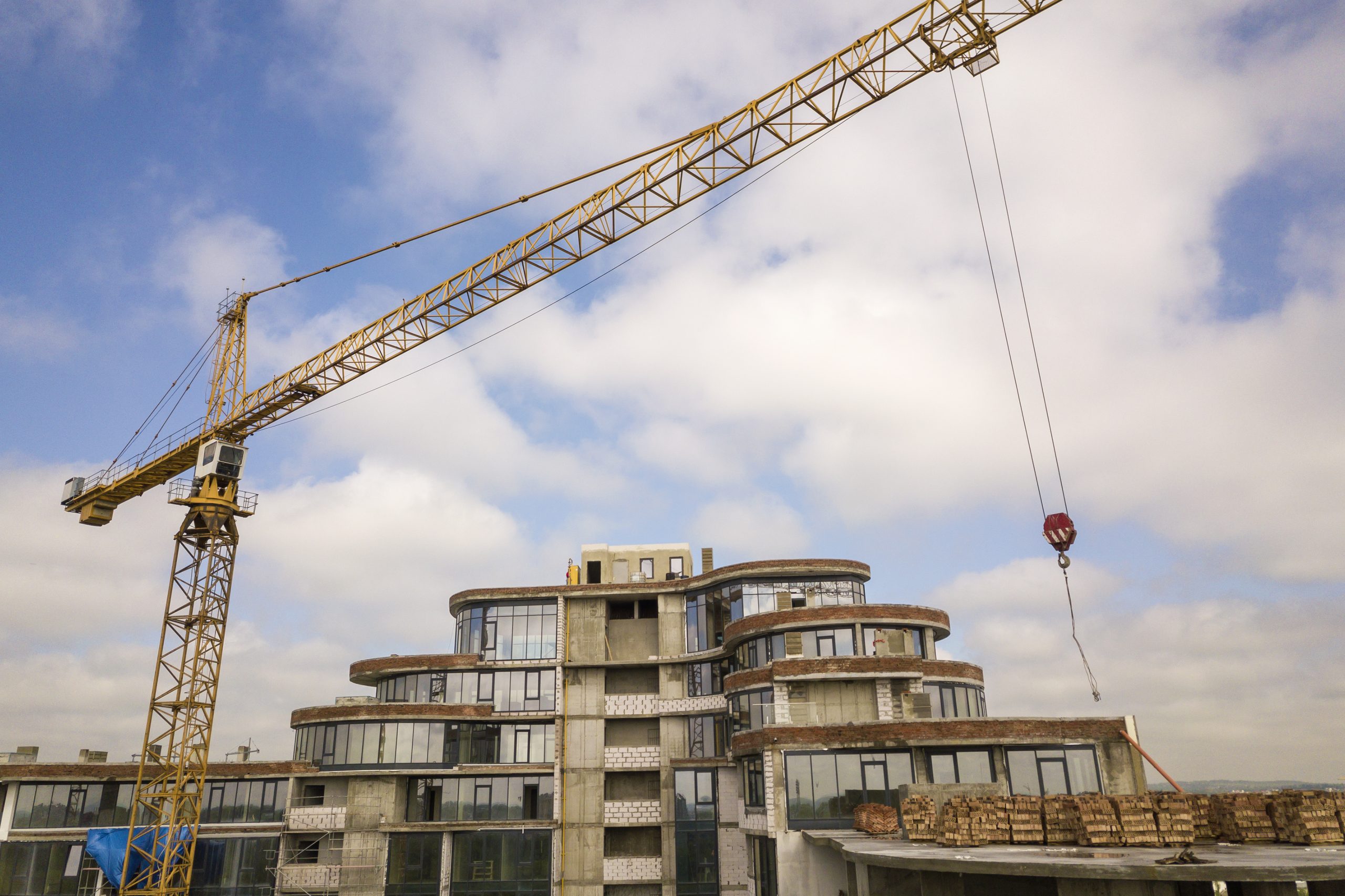
Regulatory clarity has not yet translated into construction activity. Analysis by Real Estate:Scotland and Savills found that 1,466 BTR homes were under construction in Scotland in Q2 2026, down 27% from 1,995 a year earlier and the sharpest fall of any UK nation. Lambert Smith Hampton reported that no large-scale BTR scheme was under construction in Scotland when it published its 2026 report.
The reasons are financial rather than political. Construction input costs in Scotland rose by an average of 4.25% in the year to Q1 2026, according to the BCIS Scottish Contractors Panel cited by Savills, and developer appetite for flatted schemes remains weak. Savills also recorded urban values falling 2.3% in Q1 2026 and 10.4% over the year. Higher build costs, higher finance costs and a cautious lending market mean that many consented schemes simply do not stack up at today’s numbers.
For a disciplined investor, this is not necessarily a reason to stay away. Periods when development is difficult tend to reward those with patient capital, realistic appraisals and the ability to acquire consented sites or part-completed schemes at sensible prices.
The Wider Market Context
The fundamentals underneath the rental sector remain sound. According to the UK House Price Index, the average Scottish property price reached £198,000 in August 2026, an annual increase of 2.9%, compared with 0.9% for the UK as a whole. Residential sales in Scotland rose 2.8% to 103,786 in the year to June 2026.
Supply in the private rented sector, by contrast, has been squeezed. Many smaller landlords have sold up in recent years, discouraged by regulatory change and taxation. That retreat creates room for professionally managed, purpose-built rental homes, which offer tenants longer-term security, consistent management and modern, energy-efficient accommodation.
Taxation: The Additional Dwelling Supplement
Transaction tax is an important part of any Scottish acquisition appraisal. The Additional Dwelling Supplement (ADS) is charged at a flat 8% on the full purchase price of additional residential properties costing £40,000 or more, on top of standard Land and Buildings Transaction Tax (LBTT). The 2026 to 2027 Scottish Budget left all LBTT rates and bands, including ADS, unchanged.
Two points are particularly relevant to BTR investors. First, a company or other non-individual buyer is treated as owning additional dwellings, so ADS applies to each residential purchase it makes, even where it owns no other property. Second, where six or more separate dwellings are acquired in a single transaction, the purchase is taxed at non-residential LBTT rates and full relief from ADS is available. Acquiring a completed block or a forward-funded scheme in one transaction can therefore be considerably more tax-efficient than assembling a portfolio unit by unit. As always, specialist tax advice should be taken on individual transactions.

Edinburgh and Glasgow Compared
Edinburgh remains Scotland’s deepest rental market. Constrained land supply, a strong graduate economy, the universities and year-round tourism all sustain demand, and the capital already has the largest pipeline of consented BTR homes. Waterfront locations such as Leith and Granton have attracted several of the most significant recent schemes.
Glasgow offers larger sites, lower entry prices and a growing professional population in the city centre and along the Clyde. Planning approaches to BTR differ between the two cities, so site-specific advice on policy, affordable housing contributions and design requirements is essential before committing capital.
Beyond the two largest cities, Aberdeen, Dundee and Stirling each have characteristics worth monitoring, from university-led demand to regeneration activity. Our article on where to invest in Scotland in 2026 examines these emerging markets in more detail.
What Disciplined Investors Should Consider
At Northcastle Holdings we take a long-term, measured view of the Scottish market. For investors considering build to rent, the following principles apply.
Structure for the Exemption From the Start
The exemption depends on single ownership, a minimum of six homes under one planning permission, consistent use of private residential tenancies and registration with the landlord register. These requirements should be designed into the ownership structure, the management agreement and any exit strategy from day one, rather than checked after completion.
Underwrite Conservatively
Even where a scheme is exempt, the general limits on rent increases still apply, and market rents are not guaranteed to rise. Appraisals should test performance against modest rental growth, higher-for-longer finance costs and realistic void and management assumptions.
Look Beyond New Build
Because conversions and qualifying renovations can fall within the BTR definition, well-located historic and commercial buildings may offer a route into the sector at a lower cost base than ground-up development. Repurposing redundant offices and heritage buildings also supports Scotland’s net zero ambitions, as discussed in our piece on embedding sustainability in UK property investment.
Treat Operations as Part of the Asset
Build to rent is an operational business as much as a property investment. Tenant retention, responsive maintenance, energy performance and community management all drive net income. A scheme that is well run will outperform one that is merely well located.
Consider Mixed-Use Opportunities
Ground-floor commercial space, shared amenities and flexible workspace can strengthen a residential scheme’s appeal and diversify its income. Our analysis of commercial and mixed-use property trends in Scotland explores where these opportunities are emerging.
Looking Ahead
Scotland’s build to rent sector has moved from one of the most uncertain markets in the United Kingdom to one with a clear and stable framework. The exemption from rent control areas removes the main policy barrier that held back institutional capital, and public investment is now helping to build confidence.
The challenge has shifted from regulation to viability. Build costs, finance costs and planning complexity will determine how quickly the consented pipeline converts into new homes. Investors who combine patient capital, careful structuring and a long-term commitment to stewardship are best placed to benefit as the market matures.
For a wider perspective on the market, read our guide to navigating the Scottish real estate market. If you would like to discuss property investment or partnership opportunities in Scotland, please get in touch with our team.
Frequently Asked Questions
Are build to rent homes in Scotland subject to rent controls?
Qualifying build to rent properties are exempt from rent control area restrictions under the Private Housing Rent Control (Exempt Property) (Scotland) Regulations 2026, which came into force on 1 April 2026. The general rules on rent increases under the Private Housing (Tenancies) (Scotland) Act 2016, including limits on how often rent can be raised, continue to apply.
What is the rent cap in a Scottish rent control area?
In a designated rent control area, annual rent increases are limited to CPI plus 1%, up to a maximum of 6%. The cap applies both during and between tenancies, and a designation can last for up to five years unless it is lifted earlier.
When will the first rent control areas be introduced?
Local authorities must assess rent conditions in their areas at least once every five years, and Scottish Ministers decide whether to designate a rent control area after consulting the council, landlords and tenants. Industry commentators expect the first controls to be in place by 2027.
How many homes must a development have to qualify as build to rent?
A development must contain six or more properties covered by the same planning permission and owned by the same person or group. The homes must have been completed on or after 31 August 2021, let solely under private residential tenancies since completion and included in the owner’s landlord register entry.
Can a converted or renovated building qualify?
Yes. Conversions qualify where planning permission was required for a change of use to a dwelling. Renovations qualify where the building was previously unsuitable as a home, for example because its structure was unsafe without significant repair. This opens the exemption to adaptive reuse of historic and commercial buildings as well as new build.
What happens if homes are sold individually or used as short-term lets?
The exemption ends if a property is occupied by its owner as their main home, used as a short-term let, removed from the landlord register, or no longer forms part of a qualifying development. Selling units off to individual buyers or switching to holiday letting can therefore remove the protection.
Do investors pay the Additional Dwelling Supplement on build to rent purchases?
The Additional Dwelling Supplement is charged at 8% on the full price of additional residential purchases of £40,000 or more, and it applies to every residential purchase by a company. However, where six or more dwellings are bought in a single transaction, the purchase is taxed at non-residential LBTT rates and full relief from the supplement is available.
Why is build to rent construction falling if the exemption is in place?
The barrier has moved from policy to viability. BTR homes under construction in Scotland fell 27% to 1,466 in Q2 2026, as rising build costs, higher finance costs and cautious lending held back consented schemes. Investors with patient capital and realistic appraisals may find opportunities in sites and schemes that others cannot progress.